
Compare Lawrence County Property Value Types
Mississippi records use several value terms. The assessor sets true value first. A statutory class ratio then produces the assessed figure carried into the tax roll, while a deed may state its own consideration from an actual transfer.
| Value Type | Meaning | Official Source |
|---|---|---|
| True or market value | The assessor's full-value estimate | Assessment record |
| Assessed value | True value multiplied by the class ratio | Assessment roll |
| Recorded consideration | Value stated in a conveyance, if shown | Chancery deed |
| Tax estimate | Output from selected district, value, and homestead inputs | TSC estimator, not a sale valuation |
Use assessed value for the tax base. Turn to deed consideration for a past transfer and a current appraisal for a market decision, since different dates and purposes explain different figures.
Assessment ratio is the class share of true value. Reassessment is the periodic update of appraised values, consideration is the value exchanged in a deed, and millage is the rate applied to assessed value.
Apply Mississippi Ratios to Lawrence County Value
Ratios come from the Mississippi Department of Revenue. Class I owner-occupied residential real property is assessed at 10 percent of true value, Classes II and III at 15 percent, and Classes IV and V at 30 percent. Confirm the classification first. True value times the ratio equals assessed value. Multiply that by millage and the tax follows. This is why assessed value can sit far below a market estimate without signaling a bargain sale. Note: Confirm the parcel's class with the assessor before applying a Lawrence County property value ratio.
Date the Lawrence County Assessed Value
Value figures carry a date. The TSC county page is marked Effective Year 2026. DOR requires real property to be revalued at least every four years, with annual review for changes. The year matters. Later improvements, damage, sales, splits, or combinations may not appear in an older figure. The county publishes no live parcel card or refresh stamp, so save the year and call the assessor when timing matters; the official landing page displays that effective-year context.
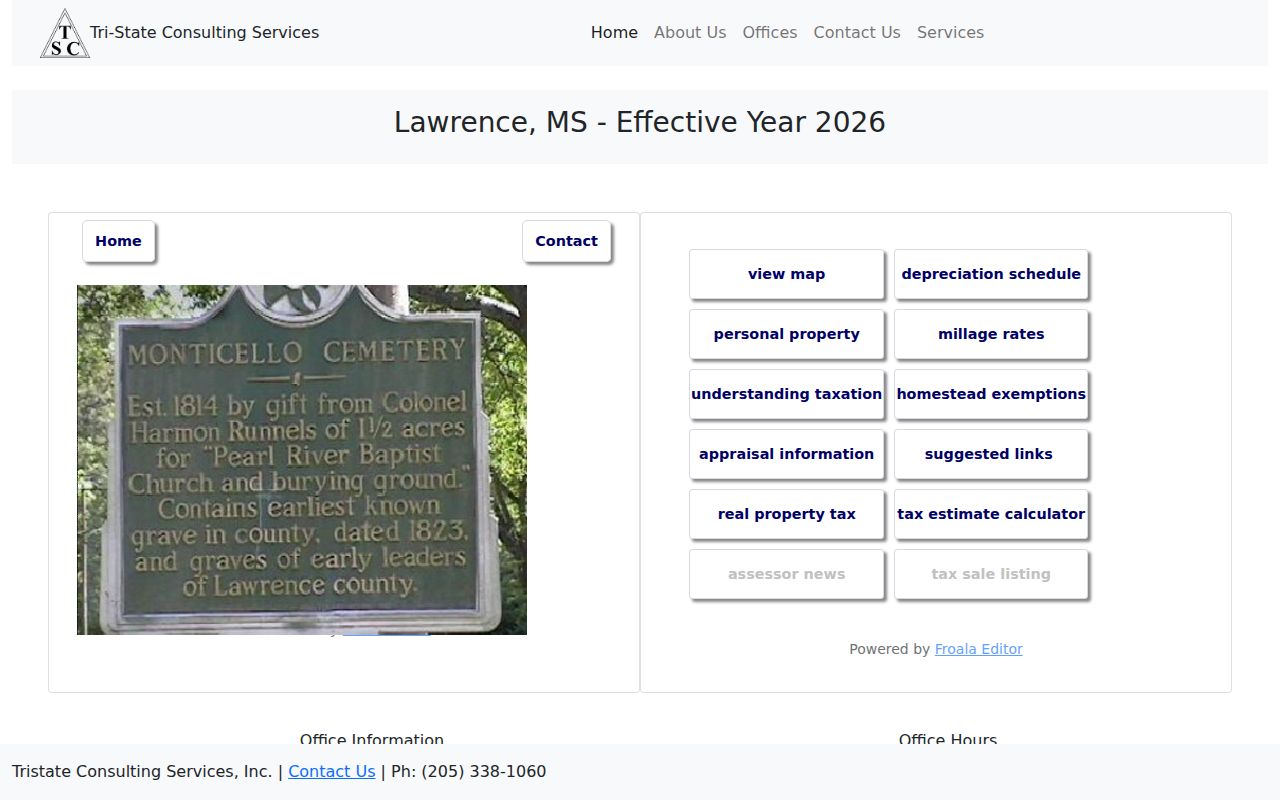
The capture shows why each value needs a date.
Estimate Lawrence County Property Value From Records
The TSC form takes PPIN, PARID, owner, or address. Results return columns for PPIN, PARID, OWNER, ADDRESS, DEED BK, DEED PG, and LEGAL 1. The result layout omits value and sale fields. Confirm those figures on the record itself or with the Lawrence County assessor.
- Find the parcel and confirm PPIN, PARID, and Legal 1.
- Record exact value labels, effective year, and class.
- Apply a verified ratio only when assessed value is not displayed.
- Request the deed when consideration is needed.
- Compare with a current appraisal when market conditions matter.
Keep Lawrence County Tax Estimates Separate
The TSC estimator asks for district and fair market value, then calculates outputs under homestead assumptions. The user supplies the value first. It is not an independent property value opinion. Millage varies by county, city, school, and district combination, so nearby parcels can carry different estimated tax at similar value. The official estimator shows its inputs.
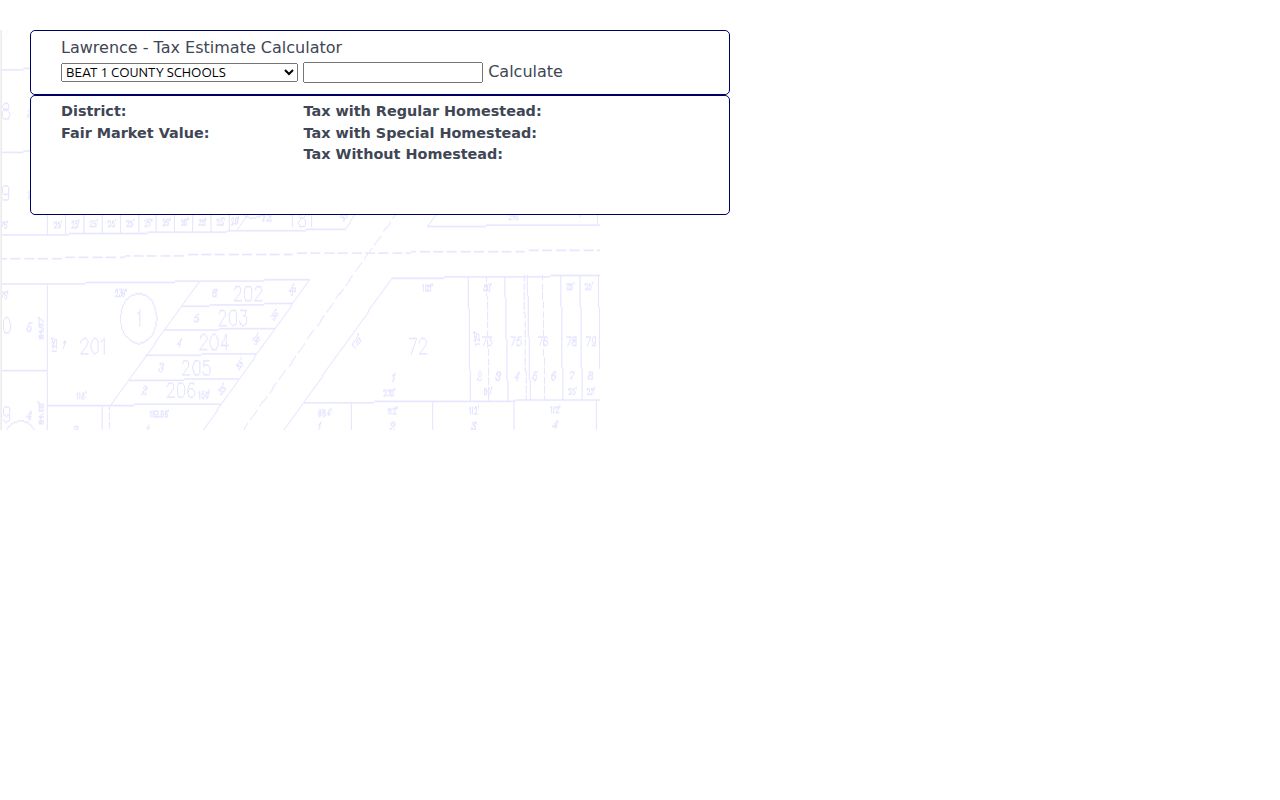
The capture makes clear that the tool calculates from an entered assumption.
Compare Lawrence County Sale Consideration
A deed is the local source for consideration and date when the instrument states them. TSC supplies DEED BK and DEED PG. The county posts no online deed index. Reach the Chancery Clerk at 601-587-7162 with parcel keys, legal description, and citation. The counter, phone, mail, or a written request works. A family transfer, estate deed, or quitclaim may not represent an open-market sale.
Separate Lawrence County Homestead From Value
Homestead changes the tax, not the value. Local guidance sets a January 2 through April 1 filing window. Those rules apply after assessed value is fixed. Do not subtract a credit from market value or call tax due a property value. The property-tax records page handles the full bill and exemption workflow.
Use Lawrence County Historic Context Carefully
The MDAH historic-property list gives names and context. A designation can shape buyer interest. It does not establish current condition, ownership, boundaries, or sale value, so compare its date against the present parcel, deed, and appraisal before crediting any uniform value adjustment.
Know What Lawrence County Property Value Cannot Prove
An assessment cannot see everything. Interior condition, private concessions, buyer competition, repair needs, and later market shifts stay outside it, while consideration reports a past transfer and an estimate applies selected inputs.
Value is not price. Lawrence County assessed value serves taxation and does not forecast the next sale. Obtain a qualified appraisal for a current market decision.
Label every figure. A responsible comparison identifies each value type, date, class, parcel key, and source, and keeping those columns separate avoids a misleading one-number answer.
Build a Lawrence County Value Comparison Ledger
Give the ledger clean columns. Parcel identifier, effective year, exact value label, class, ratio, and source each occupy one. Add consideration and deed date only after inspecting the instrument. Estimator output gets its own column. Label its district and homestead assumption beside it. Compare like with like. A 2026 assessor figure should not sit against an old sale without explaining time, property changes, family transfers, estate deeds, splits, or class shifts. The Lawrence County millage table separates county, municipal, school, and district combinations. Preserve the district when you copy rates. Rates can shift tax while value holds still, so call the Tax Assessor at 601-587-4543 with PPIN/PARID and year for missing data.
Reconcile Lawrence County Value Differences
Two numbers for the same property rarely mean one is wrong. Compare the labels first, then the amounts. One figure may be true value while another is assessed value. Each could carry a different effective year, class, district, or parcel shape. A deed price might reflect a partial transfer or a sale outside the open market. Jot the qualifier next to every number before judging anything.
Then confirm the land itself. The PPIN, PARID, Legal 1, acreage, and any lot, block, section, township, or range reference should all describe the same parcel. That means every identifier points to one piece of ground. Addresses change; legal descriptions endure. And after a parcel split or combination, an old sale price can mislead badly as a benchmark against the current assessment. Treat it as dated until proven otherwise.
The Tax Assessor can state the current class, true value, assessed value, effective year, and whether the live card separates land from improvements. The Chancery Clerk holds the deed. It matters to your comparison when sale consideration or transfer type is in question.
Mississippi's four-year revaluation cycle sets a floor, not a freeze. Values can still move between broad reappraisals. Annual review catches new construction, storm damage, corrected data, or a redrawn parcel. Keep the value notice or card you relied on, so the comparison stays anchored.
Finally, match each source to its job. County value records explain the assessment and tax picture. The recorded deed documents a past transfer. The estimator models taxes under chosen assumptions. A qualified appraisal answers the question of current market value. Keep these roles distinct. That discipline stops Lawrence County assessed value, sale consideration, and expected price from collapsing into one false number.
Split land from improvements only when the live official record shows that split. Never derive building value by subtracting an unverified figure. Multiple structures or acreage types can sit on one parcel. Ask the assessor how each was classified. Note whether a figure is a published roll value, a user-entered estimate, or deed consideration. Honest labels beat a forced dollar comparison every time.
Date every Lawrence County value source you save. If a later card changes, the dated copy shows which figure backed the earlier comparison. A correction never looks like an unexplained contradiction.