
Check the Lawrence County Owner-of-Record Card
Need the current owner of a parcel? Start with the Lawrence County TSC appraisal search. The tool takes several search terms. You can look up a parcel by PPIN, PARID, owner name, or street address. Each result row reads like a compact present-tense card, tying the tax-roll name to a single parcel and a deed citation. That makes it a dependable first stop in a Lawrence County property search.
| OWNER | The current name carried on the assessment result |
|---|---|
| ADDRESS | The displayed property address; a detailed mailing field was not verified |
| PPIN and PARID | Two parcel keys that keep the check tied to the same land |
| DEED BK and DEED PG | The bridge to a Chancery Clerk deed request |
| LEGAL 1 | The first legal-description line in the public result |
The detail card has limits. Last-sale prices, owner mailing addresses, sketches, and exemption details are not part of the live display. What the row does show is enough to confirm the owner of record and ask the recorder for the deed behind it.
Three terms help you read the card correctly. The owner of record is the owner named on the official roll, the assessment roll is the county's valuation and tax listing, and situs is the parcel's physical location, which may differ from where the owner receives mail.
Date the Lawrence County Current Owner Result
Timing matters when you date an owner. The county TSC landing page carries an Effective Year 2026 marker. That marker identifies the appraisal cycle but not the day a new deed reaches the owner field. Mississippi assesses property to the owner of record on January 1. A sale later in the year can leave a short gap. The newest deed exists at the recorder. The visible roll still shows the prior owner. When a closing is recent, treat the TSC row as evidence of the roll only. Pull the later instrument itself. Ask the Lawrence County assessor when its grantee is expected to appear. Do not assume any daily or weekly refresh schedule. The official TSC county page displays the effective-year marker you can check for yourself.
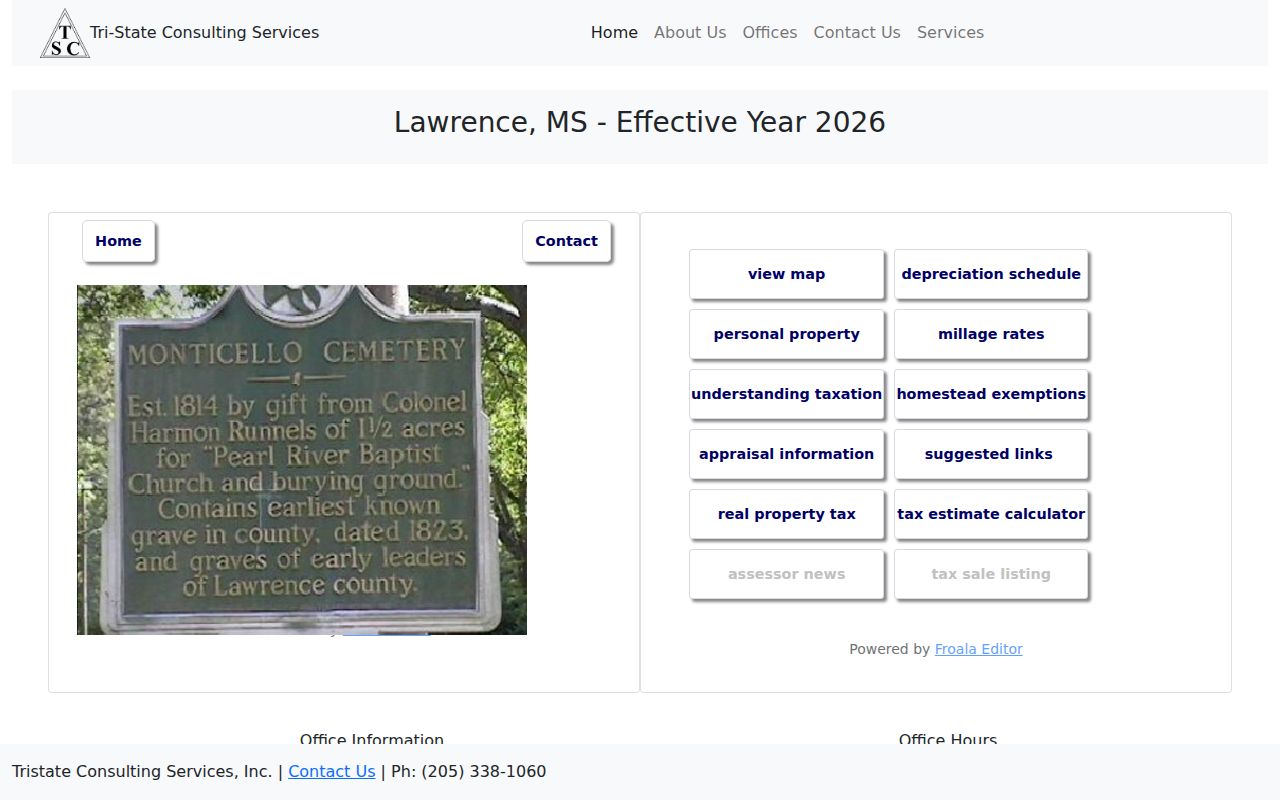
Every owner result sits inside a named appraisal year. That year anchors the record, and the county page links out to its other property tools for a deeper property search.
Separate Lawrence County Situs and Mailing Clues
A situs address and a mailing address do different work. The situs marks where the parcel sits. The mailing address shows where the tax bill goes. A rural Lawrence County parcel can carry a Monticello, New Hebron, or Silver Creek postal label. That does not mean it lies inside the municipality. The owner of record may also receive tax mail somewhere else entirely. Neither fact proves occupancy or city jurisdiction.
When an address search fails, swap in the road name, a highway variant, the exact owner spelling, or the PPIN. The PARID works just as well. Keep city, ZIP, community, and county in separate notes. Once the record surfaces, let the parcel keys and Legal 1 control the match. Do not rely on the postal label alone.
Note: A Lawrence County mailing address is a contact clue, not proof that the current owner lives at the property.
Resolve a Lawrence County Sale-to-Roll Gap
A current owner check turns on dates as much as names. Start with the appraisal effective year. Then find the newest deed recording date. If a deed postdates the roll's ownership point, its grantee is likely the later recorded owner, while the seller stays visible for tax administration.
Recent sales can lag. The Lawrence County roll may still show the seller after closing. The newest recorded deed is the stronger source for the latest recorded owner.
Keep the PPIN and PARID constant in both records. Call the Lawrence County assessor when a purchase, an estate, or a filing is at stake. The mismatch deserves review. It is not an error until the record dates are reconciled.
Verify Lawrence County Entity and Estate Owners
Owners of record in Lawrence County are not always individuals. An LLC, corporation, estate, trust, or joint tenancy can hold title. Copy the OWNER line exactly, keeping every suffix and punctuation mark. To identify a company, start with the Mississippi Secretary of State Business Search. It handles lookups by business name, ID, officer, or registered agent. The filing explains who is behind the entity. But it is not a substitute for the deed itself.
Estates need a different trail. When the tax roll names a deceased person, the Chancery probate file may hold answers. That file can include a will, an inventory, court orders, and an executor or administrator deed. The entry can sit on the roll for months while administration runs its course. Trusts work the same way. Read the trustee capacity stated in the recorded conveyance. Do not expect beneficiaries to surface in public property records.
Verify the Current Lawrence County Property Owner
Land records confirming the latest recorded conveyance rest with the Lawrence County Chancery Clerk. The office publishes no online deed index for public searching. So the fastest path blends a web start with a call, a visit, a letter, or a written request to the clerk.
- Save OWNER, PPIN, PARID, DEED BK, DEED PG, and LEGAL 1 from TSC.
- Call the Lawrence County Chancery Clerk at 601-587-7162 and request the newest deed tied to that citation.
- Compare its grantee, recording date, and legal description with the roll result.
- Ask the assessor about next-roll treatment if the latest grantee differs.
The county office description names the Chancery Clerk as custodian of Lawrence County land records. Visit at 517 E Broad Street in Monticello, or write to PO Box 821 per the state directory. Copy and certification fees change, so ask the office for current costs.
Treat a Missing Lawrence County Card as a Search Gap
An empty result does not mean the parcel is missing from Lawrence County property records. A road spelled oddly, a rural postal label, a combined parcel, or a fresh transfer can hide the row you expected. A simple indexing slip can do the same. Write down the query and the date. Then retry with all four documented search keys.
If the web route keeps failing, the 2026 state directory lists Susan Holmes Smith as Tax Assessor. She is reachable at 601-587-4543. Ask whether the parcel sits under a different address or legal description. That call is worth making. The online parcel card may not display every field you need. The assessor's staff can bridge the gap directly.
Use Lawrence County Current Owner Data Lawfully
A Lawrence County owner mailing address can be fine for lawful property correspondence. It does not prove anyone lives there, though. Mississippi's Address Confidentiality Program supplies a substitute mailing address. It shields a participant's location under Miss. Code §99-47-1. If a record shows a redacted or substitute address, respect it. Do not work around it.
Owner of record is not occupant. The roll names the party carried for tax purposes; it does not prove who lives there. Never use owner data to harass, target, or harm anyone.
A solid Lawrence County current owner result deserves documentation. Note the roll year, the search date, every parcel key, and the newest deed date. That small audit trail pays off later, because updates and corrections are far easier to follow when the starting point is written down.
Record a Lawrence County Current-Owner Audit Trail
A current-owner note earns trust only if someone else can reproduce it. Write down the TSC URL, the search date, and the effective year. Record the exact field values too: OWNER spelling, ADDRESS, PPIN, PARID, DEED BK, DEED PG, and LEGAL 1. Add a separate line for the newest deed's grantee, recording date, instrument type, and legal description. This layout exposes a sale-to-roll lag without accusing either official source of error.
When the names refuse to match, test ordinary explanations first. The deed may simply have recorded after January 1. The roll may show an estate, a trustee, or an entity abbreviation. A parcel may have been split or combined. One system may still carry the old address. Once those are ruled out, ask the assessor which parcel and roll year the name belongs to. Then ask the Chancery Clerk whether a later conveyance, correction, probate order, or fiduciary deed touches that land.
Date every contact fact, too. The 2026 Secretary of State directory lists Susan Holmes Smith as Tax Assessor. It names Kevin Rayborn as Chancery Clerk. The LTAMS page holds older personnel and contact details. Treat it as a land-index inventory and hours resource rather than the first stop for a present officeholder. Call before any courthouse visit, since a proposed FY2027 repair appropriation could affect access if work proceeds.
For a purchase or an estate, keep copies instead of jotting down just the owner name. A certified deed supports formal use. A screenshot shows what the assessment roll displayed on the day searched. Neither document alone settles every title defect, unrecorded interest, or boundary question. Qualified title review remains the right next step when real money or legal reliance is on the line.
Open any verification call with the office name, parcel keys, owner spelling, and date. Keep the questions split. Ask the assessor about the roll entry. Ask the clerk about the instrument. That division keeps a valuation-office answer from being mistaken for deed custody. Note the staff response, the request method, and any fee quoted, since procedures can change after publication.